Russian Diesel Tanker Destroyed at Sea in Fictional Hijacking Linked to Leaked Shipping Documents
NEW YORK — October 23, 2026 — A tanker carrying 40,000 metric tons of Russian diesel toward New York is hijacked and destroyed in a fictional maritime attack that raises questions about compromised cargo documents, unauthorized access to shipping schedules and possible involvement by actors connected to the war in Ukraine.
The imagined incident follows a real U.S.–Russia energy agreement that has drawn criticism over its potential financial benefits to Moscow.
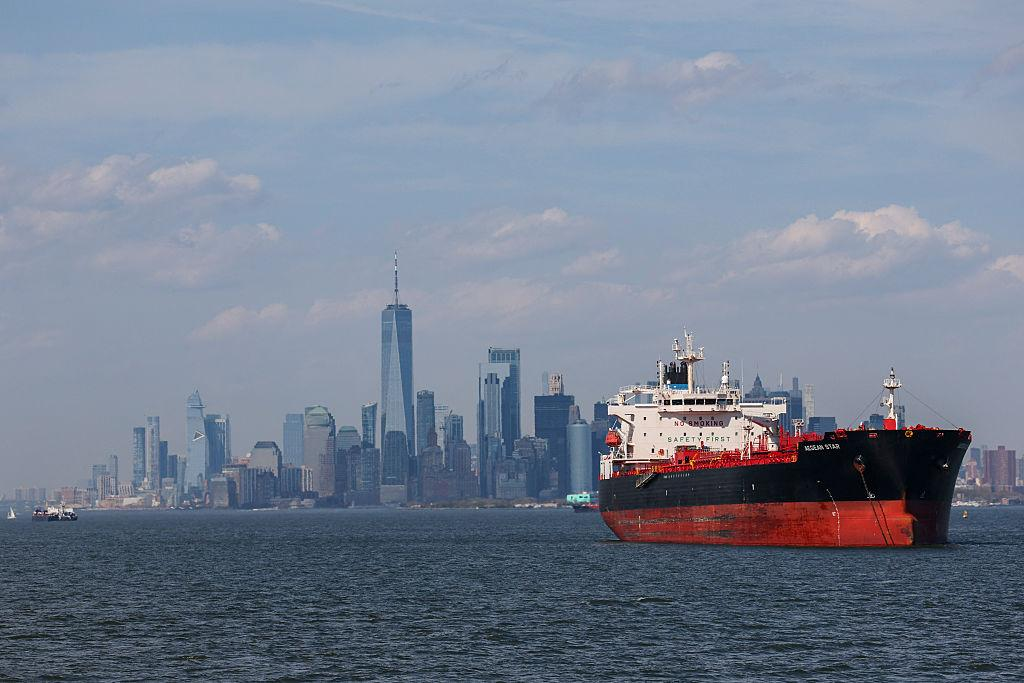
Reuters reported on October 23 that a Malta-flagged tanker, Agioi Fanendes, had loaded Russian diesel at the Baltic port of Primorsk on October 22 and was heading toward New York, with an expected arrival in early November.
 A 40,000-Ton Shipment Disappears
In the fictional account, the tanker loses contact with its commercial operator while crossing international waters.
A distress transmission reports that armed intruders have entered the vessel and taken control of its communications equipment.
Hours later, an explosion damages the ship, forcing the crew to abandon it.
The cargo is subsequently declared lost.
The imagined incident threatens the first major delivery under an arrangement intended to increase Russian diesel supplies to the United States and global markets.
The real shipment represents approximately 300,000 barrels of diesel, a relatively small quantity compared with daily American fuel consumption.
Its destruction would nevertheless create a significant commercial and diplomatic dispute because of the political importance attached to the agreement.
The Cargo Codes That Raise Questions
The fictional investigation turns toward information allegedly obtained before the attack.
Investigators discover that the hijackers possessed details resembling restricted commercial shipping documents, including the cargo reference number, loading records and expected delivery schedule.
The information would not necessarily be secret military intelligence. Commercial shipping involves numerous companies, including vessel operators, brokers, insurers, terminal operators and cargo purchasers.
Access to some documentation may be restricted, but knowing a vessel's general route does not establish that an insider leaked information.
In the fictional scenario, investigators examine whether the attackers obtained records through an unauthorized account, a compromised contractor or a person with legitimate access.
No individual is identified as the source.
Why Ukraine Enters the Investigation
The supposed Ukraine connection emerges because the shipment is tied to a politically sensitive agreement between Trump and Russian President Vladimir Putin.
Ukraine has criticized arrangements that could provide Russia with additional export revenue while the war continues.
Ukrainian attacks on Russian energy infrastructure have also disrupted refining operations.
Those established circumstances provide geopolitical context, not evidence that Ukraine organized a hijacking.
In the fictional investigation, one document recovered from a communications device contains a reference to a Ukrainian intermediary.
But investigators cannot establish whether the reference identifies a real participant, a misleading contact or deliberately planted information.
Who Could Have Leaked the Shipment Details?
The fictional inquiry identifies three possible sources of unauthorized access.
The first involves a commercial shipping contractor that handled voyage documentation.
The second concerns an account used by a cargo broker to exchange delivery information.
The third involves a logistics employee whose credentials were reportedly accessed shortly before the attack.
None of these leads establishes wrongdoing.
Investigators would need authenticated access logs, communications records and corroborating testimony before identifying a responsible party.
The distinction is especially important because maritime tracking information can sometimes be obtained through legitimate commercial services.
A ship's location or destination becoming known does not, by itself, prove a security breach.
The Unanswered Question
The fictional investigation ends with the discovery that the attackers may have known the cargo documentation before the vessel departed Russia.
That detail shifts attention from the explosion itself to the handling of shipping information.
But the central questions remain unresolved: who obtained the records, whether an insider helped the attackers and whether the purported Ukraine connection is genuine.
In the real world, the reported diesel shipment remains an outbound commercial voyage, not a confirmed hijacking or maritime disaster.